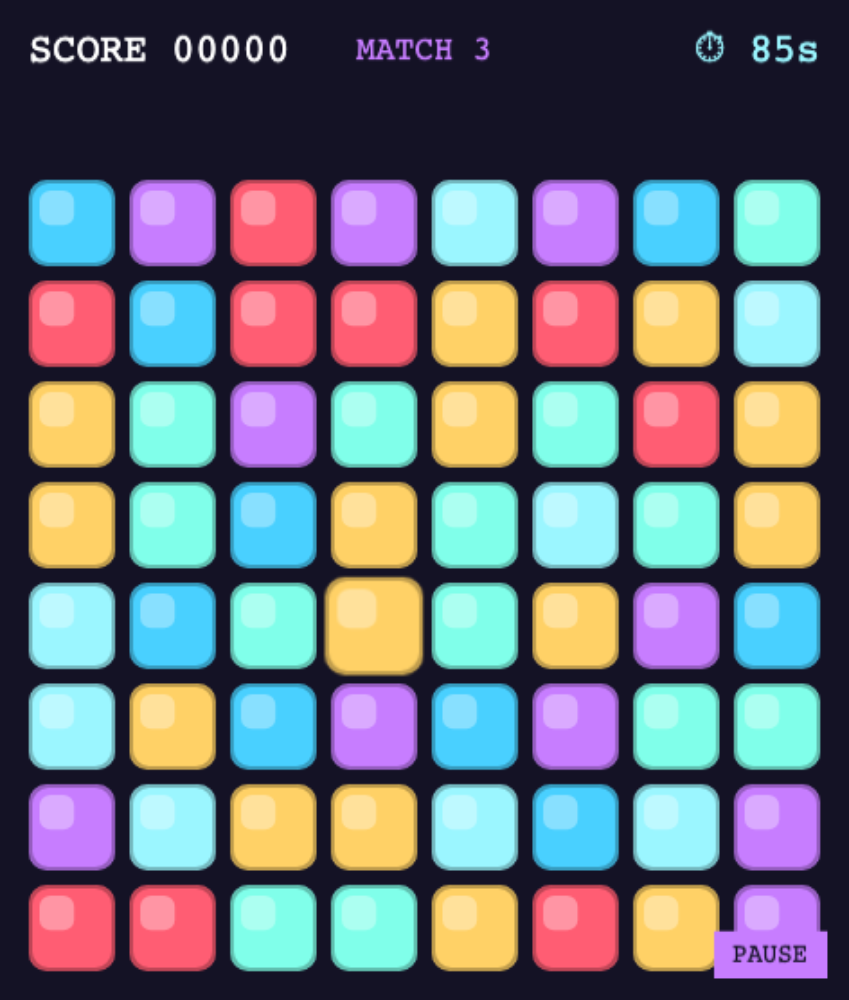
How does a match create a bigger score?
Players swap neighbouring gems to create a match. When those pieces clear, new gems fall into place and may make another match. The cascades and combo score reward moves that set up more than one clear, so a board can feel strategic without requiring a long tutorial.
Why does the game use a 90-second timer?
A short clock gives each round a clear ending and makes the score easy to compare between attempts. Players can experiment with a move, then decide whether a faster strategy works better. You could replace the timer with a move limit or a target score if your audience prefers a slower puzzle.
Can the gem puzzle use a different theme?
Yes. The matching rule does not depend on gems, so a founder could use fruit, symbols, plants, or objects from a particular story. Keep the pieces distinct enough to recognise quickly, and make the clearing animation show why a move worked. Those visual choices matter most when someone is playing on a small screen.