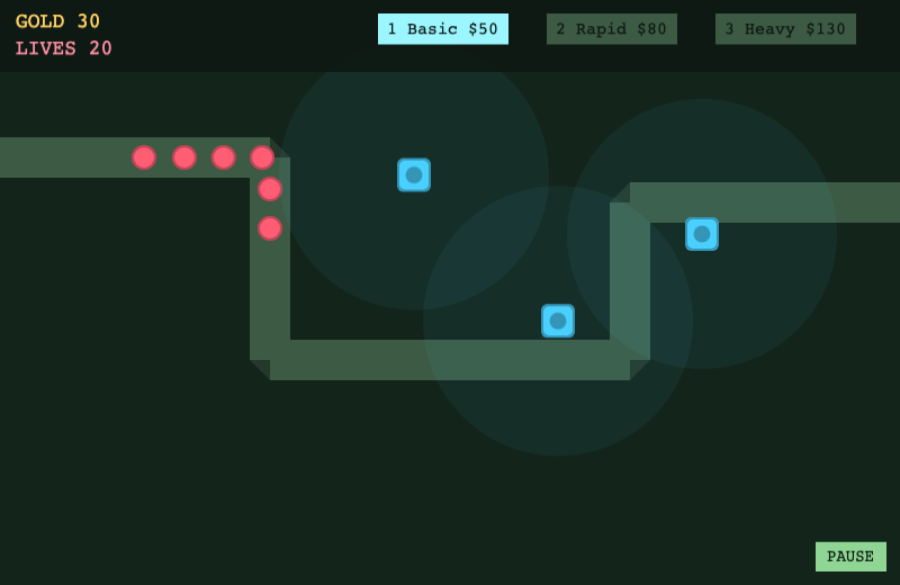
What choices does a player make in tower defence?
The player chooses where to spend gold and which tower type fits the route. Basic, rapid, and heavy splash towers serve different purposes, while leaked enemies reduce the remaining lives. A strong plan considers both the path and the next wave instead of placing every tower as soon as it is affordable.
How are the maps different?
The three authored routes are called meadow, switchback, and gauntlet. Their shapes change the time enemies spend near a tower and the places where defences can cover the path. A founder making another map should keep the route legible and give players enough room to understand why a placement worked.
What happens after the final wave?
Clearing all twelve waves wins the current map and advances the player to another route. If the defence falls, the game records the wave reached and shows a high score. That makes the result clear while leaving room for another attempt with a different tower plan.