Can the computer see my fleet?
No. The opponent's search logic is built so it cannot inspect the player's board. After a hit, it hunts nearby locations, but it still has to discover ships through its own guesses. That keeps the match fair while letting the computer react to evidence.
How large is the Battleship board?
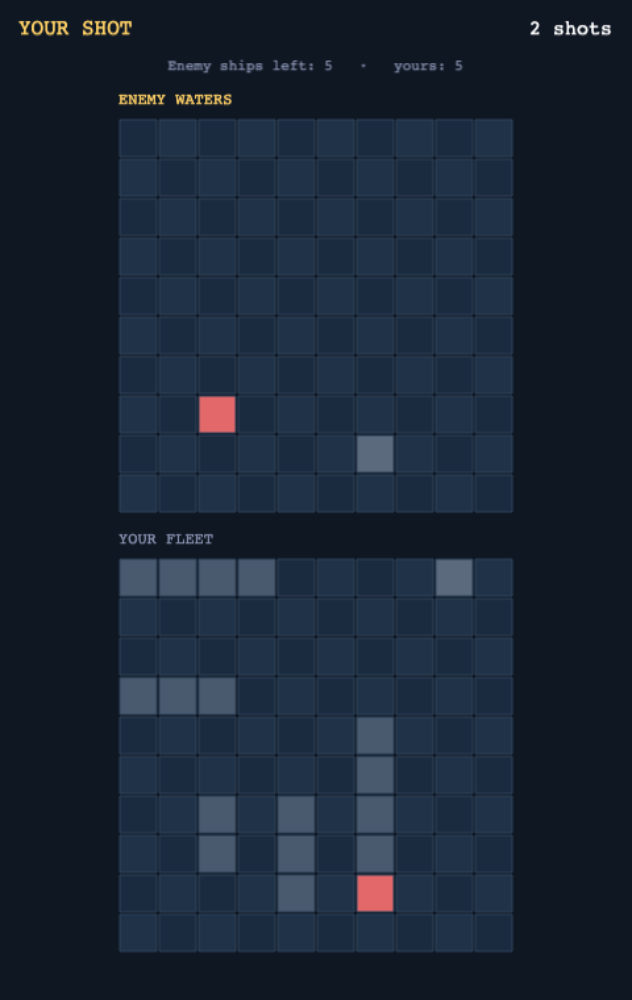
Both players use a ten-by-ten grid, and each fleet contains the classic five ships. Both grids stay visible during the game, making it easy to track which locations have been searched and where a ship may still be hiding. The turn changes only after a shot, so the board stays focused on deduction rather than reflexes.
What does the leaderboard reward?
The board ranks players by the fewest shots used to find the opposing fleet. That favours careful search patterns over firing at random. A founder could adapt the same idea to another hidden-object contest where players benefit from learning from each result.