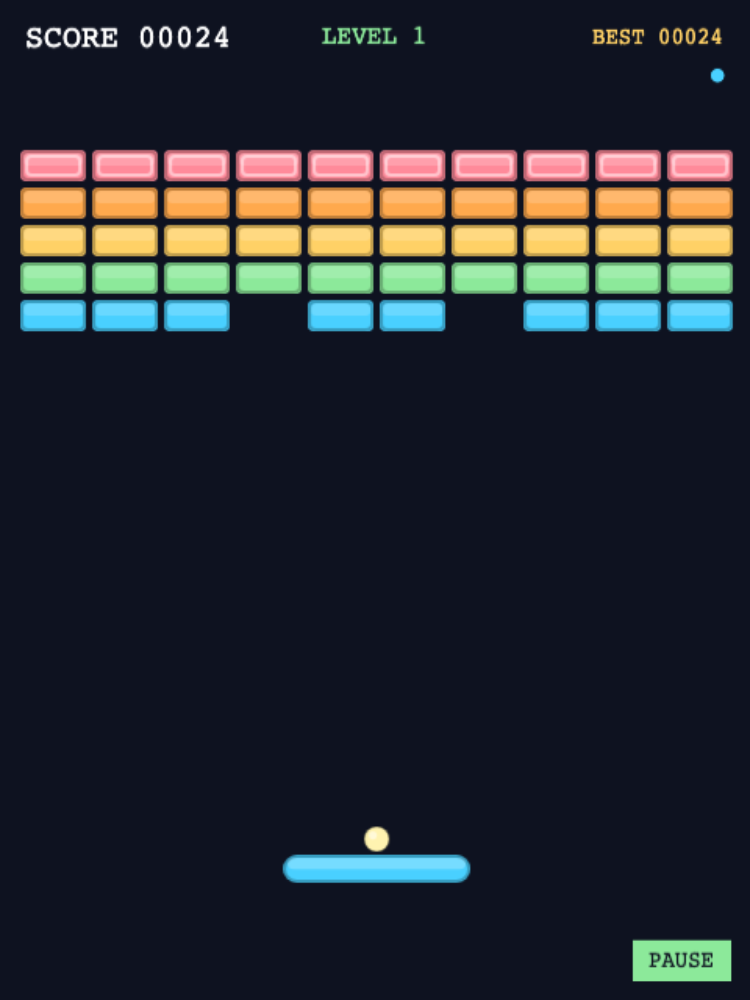
Can players steer the ball in Brick Breaker?
The rebound changes with the hit position on the paddle. A player can move the paddle toward an edge to send the ball on a different path, adding a choice to every return. That control makes it easier to target the remaining bricks instead of waiting for random bounces.
What do the power-ups change?
A wide paddle gives more room to catch the ball, a slow-ball effect eases the timing, and multi-ball sends several balls across the field. The game has three lives, so a bonus can change the shape of a run without removing the risk of missing a return.
How does the game continue after a level?
The levels are generated in a continuing chain, and brick tiers become tougher over time. Players can pause, lose a life, and restart without needing to learn a new control scheme. A founder could make levels around a theme or add an end goal for a shorter arcade experience.