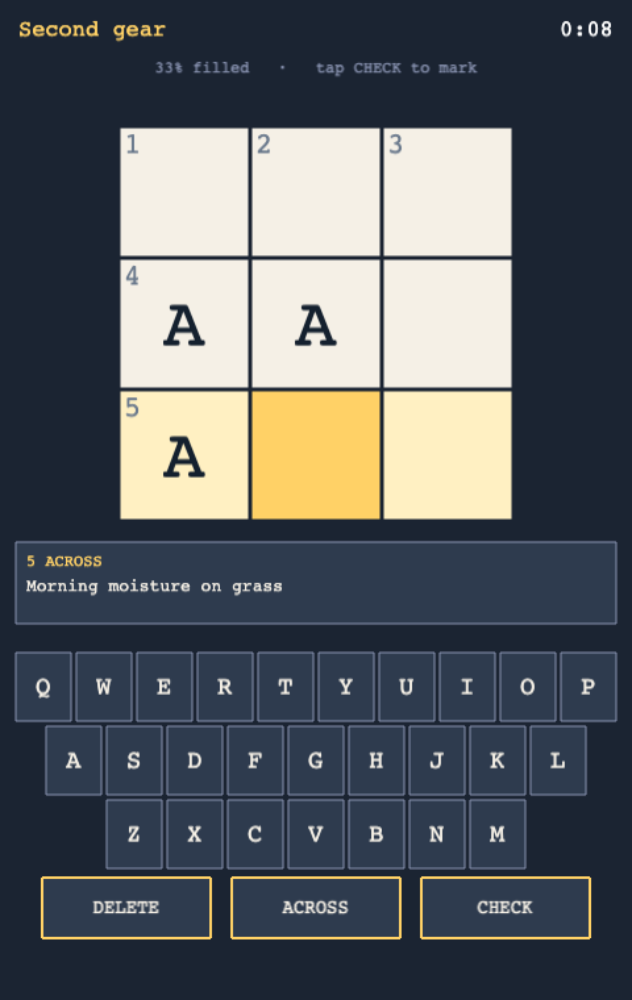
How do I switch between across and down clues?
Tap a square to select it, then tap again to switch the direction when both an across and a down answer use that cell. The numbered grid keeps each clue connected to its space. A built-in keyboard lets phone players enter letters without opening a separate keyboard.
Can I check answers while solving?
A check-my-answers toggle can flag a square that does not fit. The game also times a solve and keeps personal bests. Those tools help players decide whether they want a hint while preserving the work they have already done. Short clues and a clear grid help a player move between an easy first answer and a tougher crossing.
Can I write my own crossword?
The game accepts custom puzzles as a data file and rejects a puzzle that cannot actually be solved. That guard protects players from a bad clue crossing that would make completion impossible. A founder adding their own clues should test the whole grid, not just proofread each question alone.