Browser game example

EXPLORE ROOMS IN A DUNGEON GAME

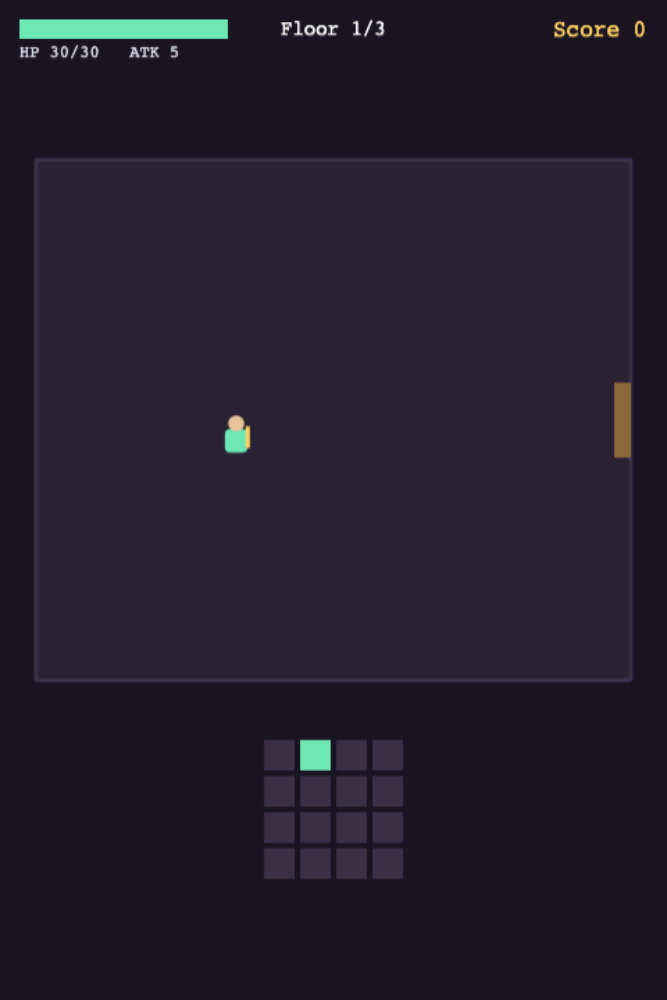
The player moves room by room through three generated floors, choosing doorways and looking for the stairs. Beetle fights take turns, giving time to decide whether to swing a sword, drink a healing potion, or open a chest for more strength.

A map records explored rooms, while a retro first-person view offers another way to travel. Each floor has a clear next goal, and the local best score and top-ten board reward a deeper expedition.

Cleo is opening to founders in small batches. Join the waitlist and we'll save your spot.

Updated

A real screenshot of Explore Rooms in a Dungeon Game

WHAT THIS EXAMPLE SHOWS

The player moves room by room through three generated floors, choosing doorways and looking for the stairs. Use the sample to name the audience, the main action, and the smallest useful first version. Cleo HQ then helps turn your own brief into a product plan and a working build.

QUESTIONS FOUNDERS ASK

How does a dungeon floor work?

Rooms are arranged into three generated floors, and the player must find the stairs to continue. Doorways move the hero between rooms; a map helps track places already explored. The changing layout makes each expedition feel like a route to uncover rather than a fixed corridor.

What choices happen during a fight?

Battles with beetles take turns, so the player can consider the next action instead of reacting to a timer. Potions restore health, and opening a chest can make later attacks stronger. Those small decisions connect exploration with combat and give useful reasons to search each room.

What is the retro 3D view for?

The same dungeon can also be explored from a first-person retro perspective. That view changes how a player reads nearby doors while the room-by-room journey stays intact. A founder could keep the turn-based fights and map while creating a different setting, enemy set, or treasure system.