Browser game example

SOLVE CLUES IN A BROWSER ESCAPE ROOM

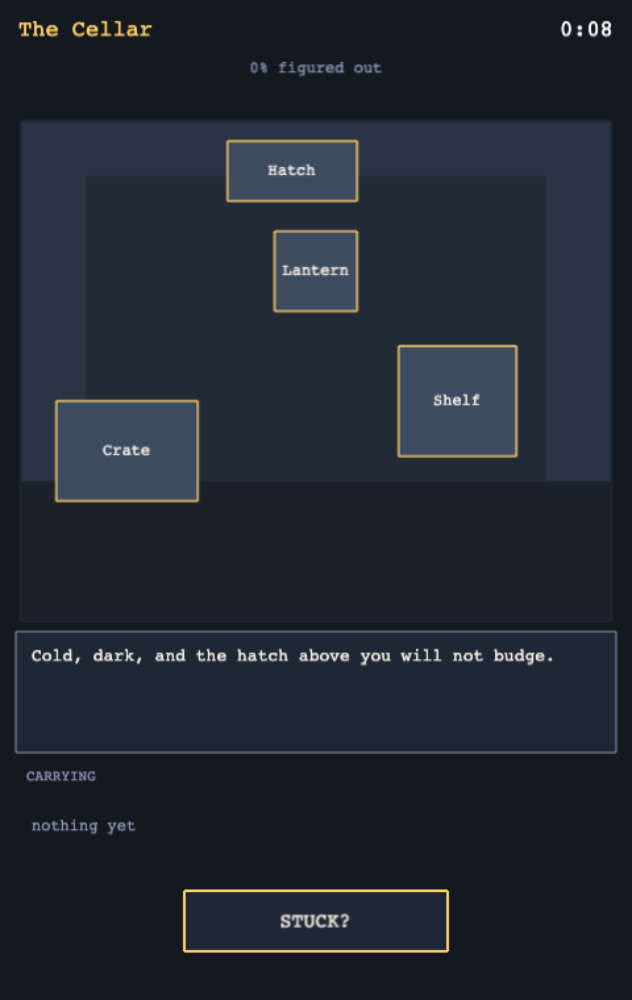
The player explores a room by clicking objects, collects useful items, and uses them to open locks in sequence. An inventory keeps found objects visible while the room's clues invite careful inspection.

A hint points toward the next step without revealing the solution outright. Custom rooms are checked for a real escape route, so a puzzle that cannot be completed is rejected before it reaches a player.

Cleo is opening to founders in small batches. Join the waitlist and we'll save your spot.

Updated

A real screenshot of Solve Clues in a Browser Escape Room

WHAT THIS EXAMPLE SHOWS

The player explores a room by clicking objects, collects useful items, and uses them to open locks in sequence. Use the sample to name the audience, the main action, and the smallest useful first version. Cleo HQ then helps turn your own brief into a product plan and a working build.

QUESTIONS FOUNDERS ASK

How does the inventory help solve a room?

Objects collected during exploration stay in an inventory, where the player can choose how to use them. Locks open in a set order, connecting what someone finds to the next puzzle. This makes observation and item choice part of the same escape-room journey.

Do hints reveal the whole solution?

The hint button points the player toward a useful clue without giving away the complete answer. That lets someone recover from a stall and still enjoy the moment of solving. A timer and personal best record add a replay goal after the room is escaped.

Can a custom room get stuck?

The game rejects rooms that cannot actually be escaped, which protects players from reaching an impossible lock sequence. Founders can write their own rooms as data, then check that every required clue and item is available in order. That is a useful safety check for any branching puzzle.