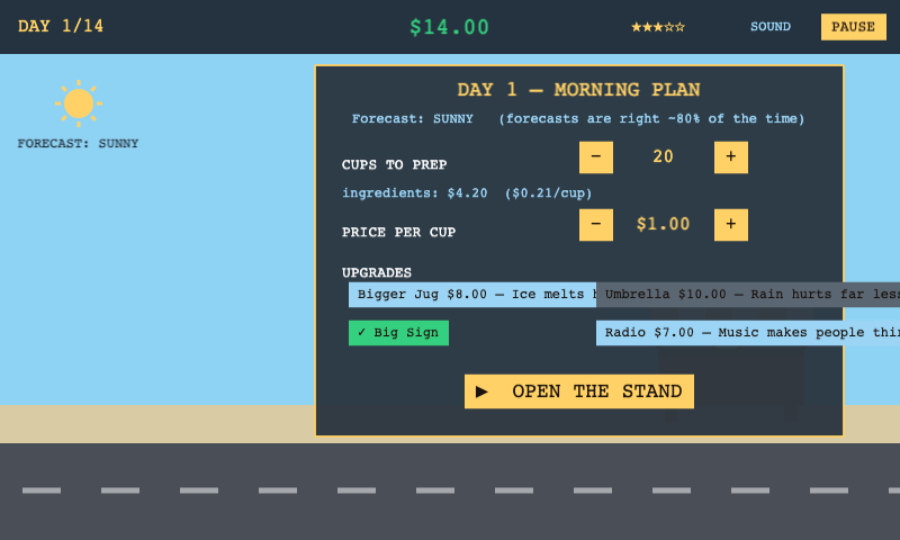
Browser game example

SET PRICES IN A LEMONADE STAND GAME

Every morning starts with choices: read a forecast that may be wrong, prepare cups, set the lemonade price, and buy an upgrade. Then customers walk up to the stand while the till shows the day's sales.

At night, profit and reputation are reviewed alongside random street events. A fourteen-day run autosaves, and earned titles give a playful record of how well the stand weathered each season.

Cleo is opening to founders in small batches. Join the waitlist and we'll save your spot.

Updated

A real screenshot of Set Prices in a Lemonade Stand Game

WHAT THIS EXAMPLE SHOWS

Every morning starts with choices: read a forecast that may be wrong, prepare cups, set the lemonade price, and buy an upgrade. Use the sample to name the audience, the main action, and the smallest useful first version. Cleo HQ then helps turn your own brief into a product plan and a working build.

QUESTIONS FOUNDERS ASK

What can I decide each morning?

Players check an unreliable forecast, choose how many cups to prepare, set a price, and consider an upgrade. Those choices affect the trading day that follows. A price that is too high may reduce sales, while too few cups can leave customers waiting.

What happens during the trading day?

Customers visibly walk to the stand and the till updates as sales happen. Random street events add changes to the plan, then an evening recap shows profit and reputation. The simulation tracks money exactly to the cent. That recap helps players connect a morning decision, such as price or stock, to its result that evening.

How long is a run?

A season lasts fourteen days, with progress saved in the middle of a run. The best-run record and earned title provide a result to beat next time. Players can change prices or supplies and see how a different plan affects the stand.