Browser game example

FRUIT AND VEGETABLE MEMORY GAME

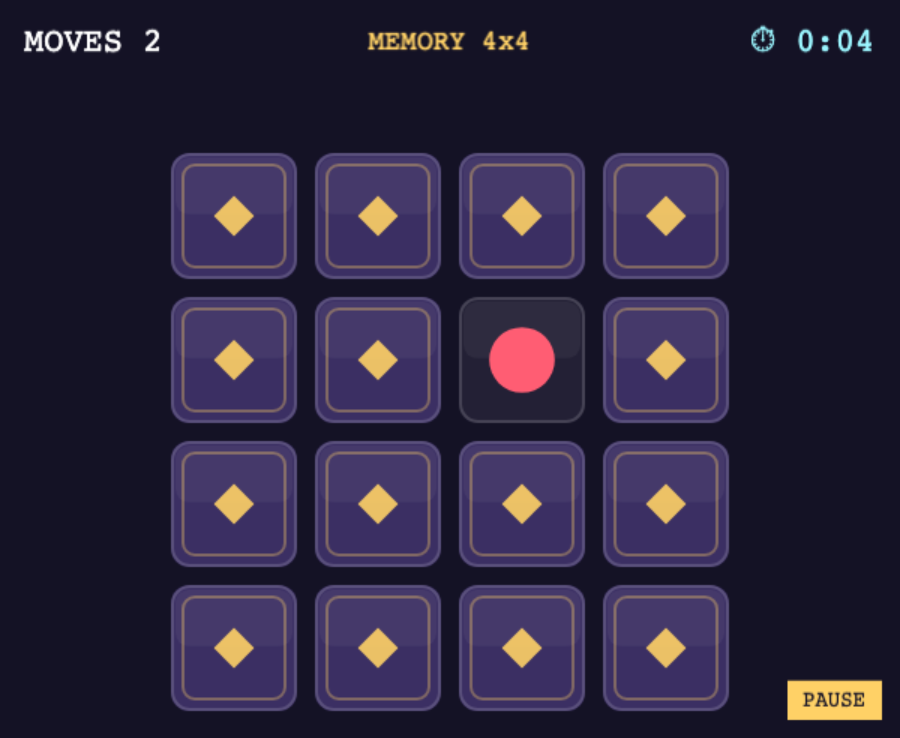
Players turn over two cards at a time and rely on memory to find matching fruit and vegetable pictures. The standard board has sixteen cards; a larger hard mode adds another row and more places to remember.

A move counter and timer make each attempt easy to compare. Best times are saved separately for each mode, so a player can return to the easier board without losing a record from the harder one.

Cleo is opening to founders in small batches. Join the waitlist and we'll save your spot.

Updated

A real screenshot of Fruit and Vegetable Memory Game

WHAT THIS EXAMPLE SHOWS

Players turn over two cards at a time and rely on memory to find matching fruit and vegetable pictures. Use the sample to name the audience, the main action, and the smallest useful first version. Cleo HQ then helps turn your own brief into a product plan and a working build.

QUESTIONS FOUNDERS ASK

What is different about hard mode?

The standard game uses a four-by-four grid, while hard mode expands the board to six rows by four columns. More cards mean more locations to remember before a pair is found. Separate best times by mode let players compare progress on equal terms.

What does the game measure during a round?

It keeps a move count and a running timer while players search for pairs. Those two measures show different kinds of progress: someone may finish quickly with extra turns, or take longer while remembering more cards. The win screen gives players a chance to start another round.

Can the card pictures be changed?

The current sample uses drawn fruit and vegetable faces with sound and music. A new version could use animals, symbols, landmarks, or words from a learning topic. Clear images and a consistent back design matter because the game depends on remembering where each face appeared.