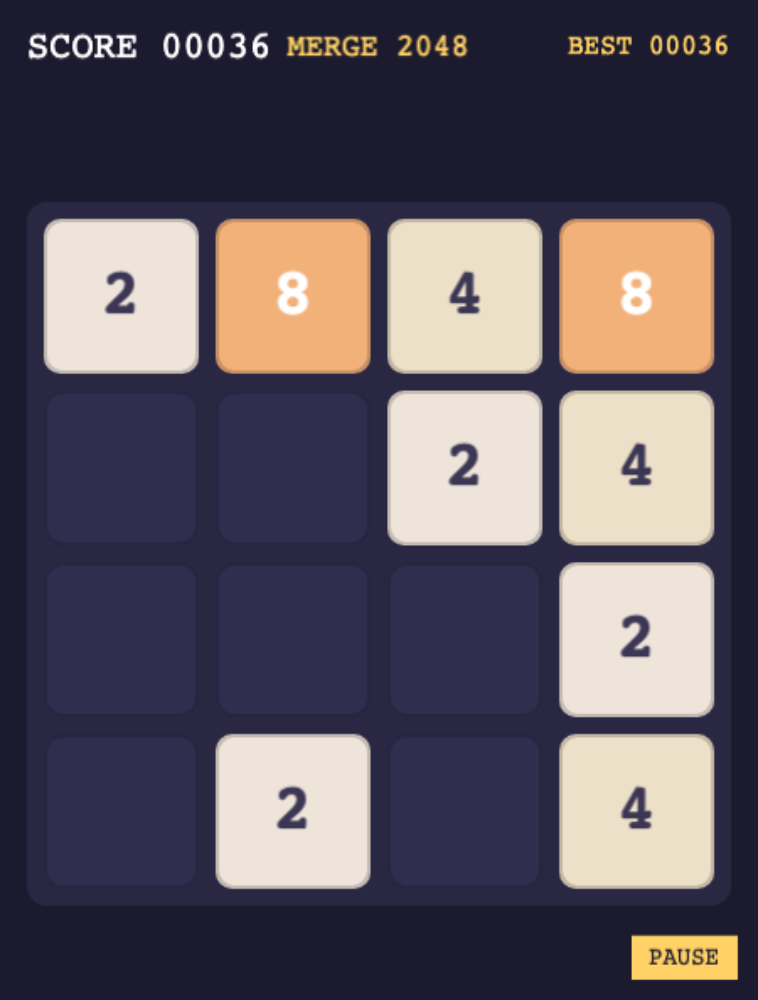
Browser game example

2048 NUMBER TILE MERGE PUZZLE

Every move shifts the four-by-four board in one direction. When matching number tiles meet, they merge into a larger value; each tile can merge only once during that move, so planning the next slide matters.

Reaching 2048 triggers a win moment, but the player can keep going. Resumable saves and a local best score support quick breaks without changing the simple goal of making room for the next useful merge.

Cleo is opening to founders in small batches. Join the waitlist and we'll save your spot.

Updated

A real screenshot of 2048 Number Tile Merge Puzzle

WHAT THIS EXAMPLE SHOWS

Every move shifts the four-by-four board in one direction. Use the sample to name the audience, the main action, and the smallest useful first version. Cleo HQ then helps turn your own brief into a product plan and a working build.

QUESTIONS FOUNDERS ASK

What happens when two number tiles meet?

Matching tiles combine into one tile with a higher value. The rule allows each tile to merge only once in a move, which stops one piece from cascading through several values at once. Players must watch the whole board, not just the pair they hope to combine.

Does the game stop at 2048?

The player gets a win moment when a tile reaches 2048, then can choose to continue. That lets the classic goal feel meaningful without forcing someone to abandon a board they still want to solve. The game can resume from its saved state after a break.

What makes a good next move?

A useful move creates space while keeping larger tiles near one side of the board. Because every slide can shift several rows and columns, an apparently small choice may block a later merge. The sample is a way to explore how a simple rule can create a deeper planning puzzle.