Why does the signal wait for a random time?
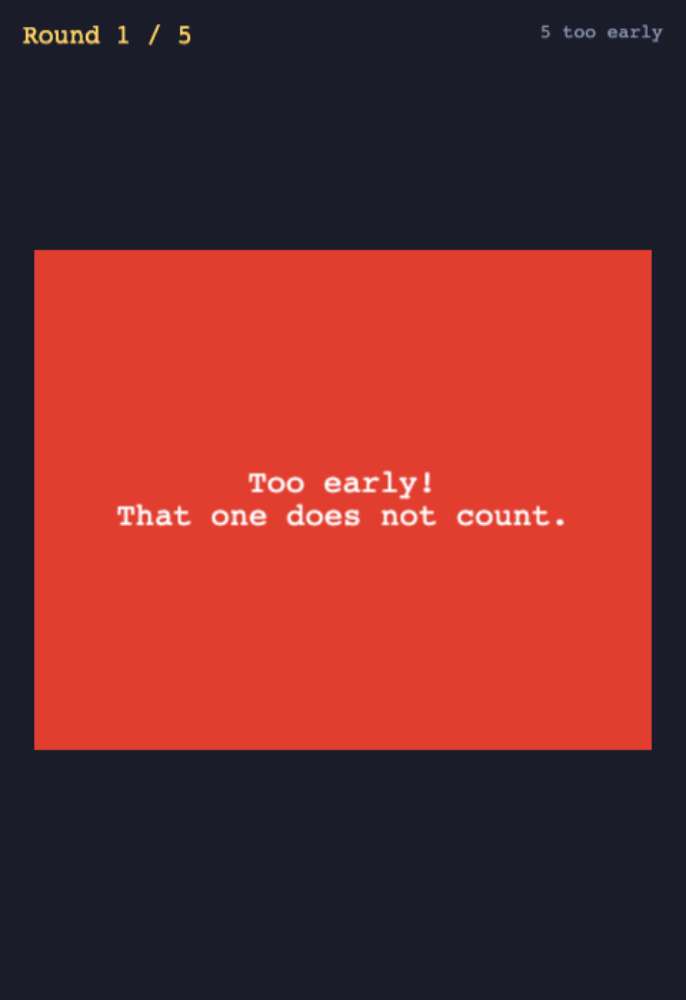
The pause changes between rounds so a player cannot reliably anticipate when the signal will appear. Tapping before it arrives counts as a false start, which prevents a guessed response from looking like a quick reaction. Each round measures readiness to respond to the actual cue.
Why is the median used for the score?
The game runs five rounds and reports the middle result rather than the fastest or slowest. That gives a steadier picture when one tap is unusually early or late. A plain-language rating helps players interpret the result without needing to compare a chart.
What does the personal best record?
The saved best makes it easy to try again and see whether a player can improve their own median. The short format works for a quick break and does not require a long tutorial. A similar test could measure another simple response, provided the signal and scoring stay fair.