How many guesses do players get?
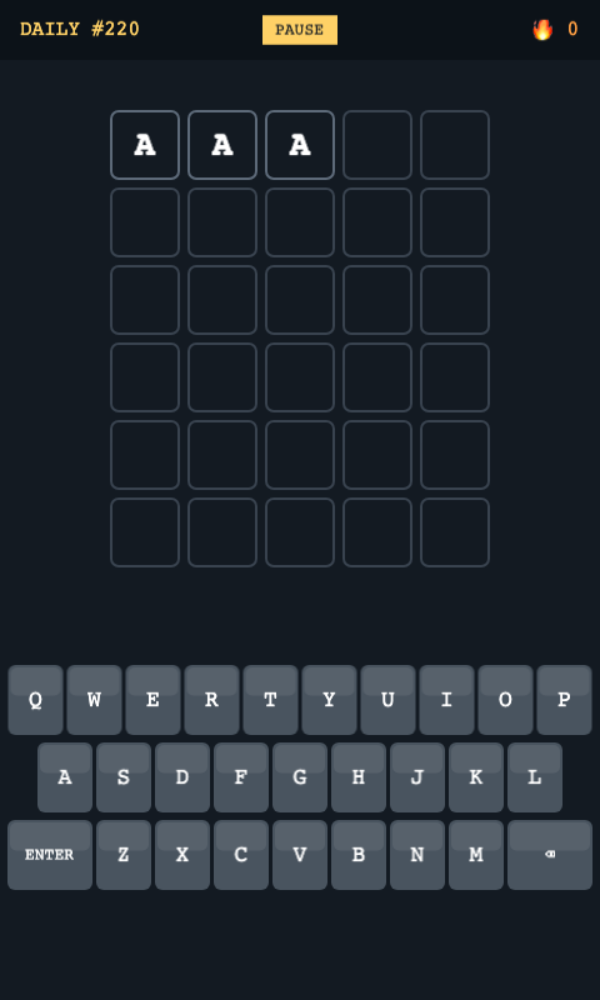
The daily word has five letters, and the player can make up to six guesses. The tile grid reveals information after each attempt, so a good next guess uses what has already been learned. The same shared puzzle makes it easy for friends to compare their result without needing a leaderboard.
Can I practise outside the daily puzzle?
Yes. The sample separates unlimited practice from the one shared daily word. Players can experiment freely without changing the daily challenge, then track local streaks and how many guesses they usually need. This split works well when a game needs both a communal moment and room to learn.
How does the share grid avoid giving away the word?
The share card uses a pattern of emoji tiles to show the shape of a result rather than the letters themselves. Friends can see how many guesses a player needed while keeping the answer hidden. That small choice helps a daily game travel through conversations without spoiling tomorrow's puzzle.