Can I prepare a post without making it public?
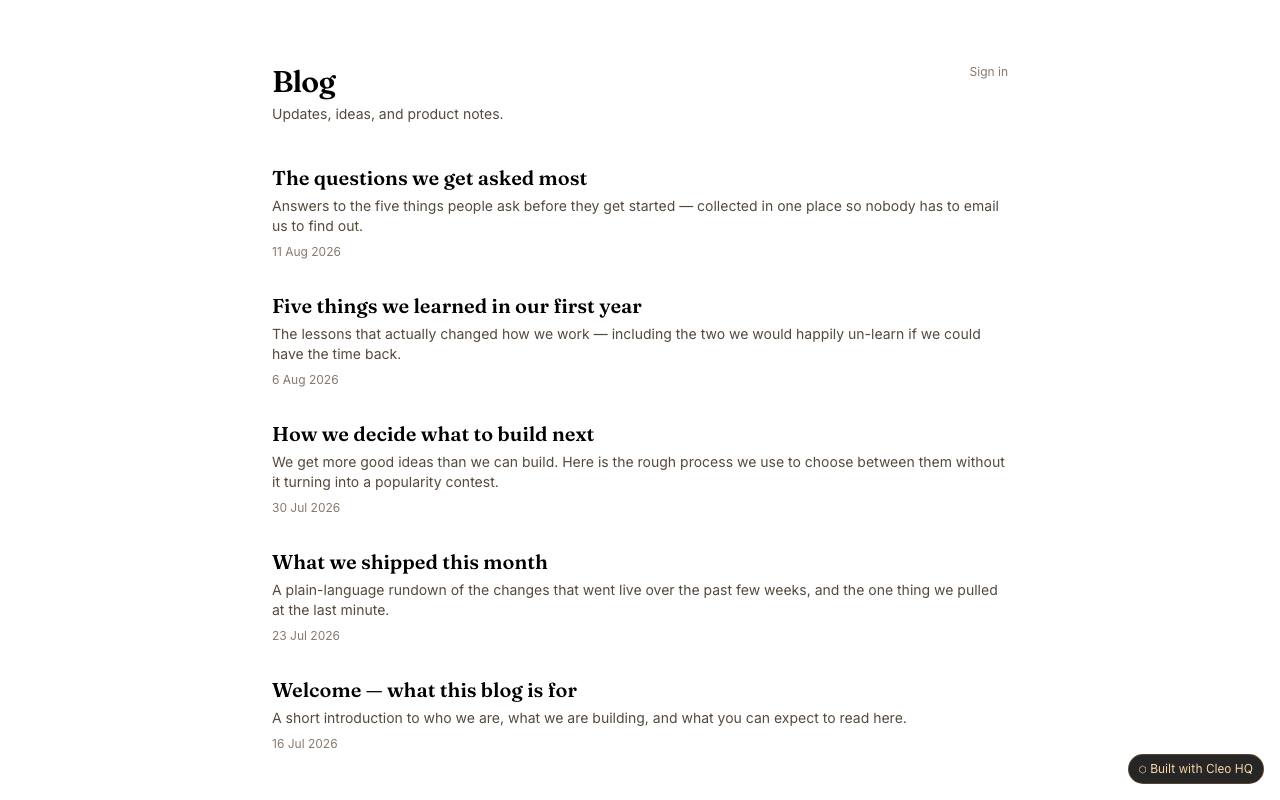
The example distinguishes drafts from public posts, so writing can be prepared before readers see it. That is useful when an article needs fact-checking, images, or another person’s review. Set a simple publishing rule for your team: who can edit a draft, who gives final approval, and how you will confirm that the live version contains the intended title and links.
How should I choose tags for a blog archive?
Use tags for subjects readers would actually search or browse, rather than creating a new label for every article. The sample pairs posts with tags so visitors can narrow the archive by topic. A small, consistent vocabulary makes those filters more useful; review existing tags before adding near-duplicates such as singular and plural forms of the same subject.
What should I consider when updating a published article?
Decide whether an edit changes only wording or affects the advice a reader may rely on. The public blog and its writing area make publishing and preparation separate tasks, so an update can be checked before it replaces the current post. For substantial changes, consider showing an updated date and revisiting links or examples that may have become stale.