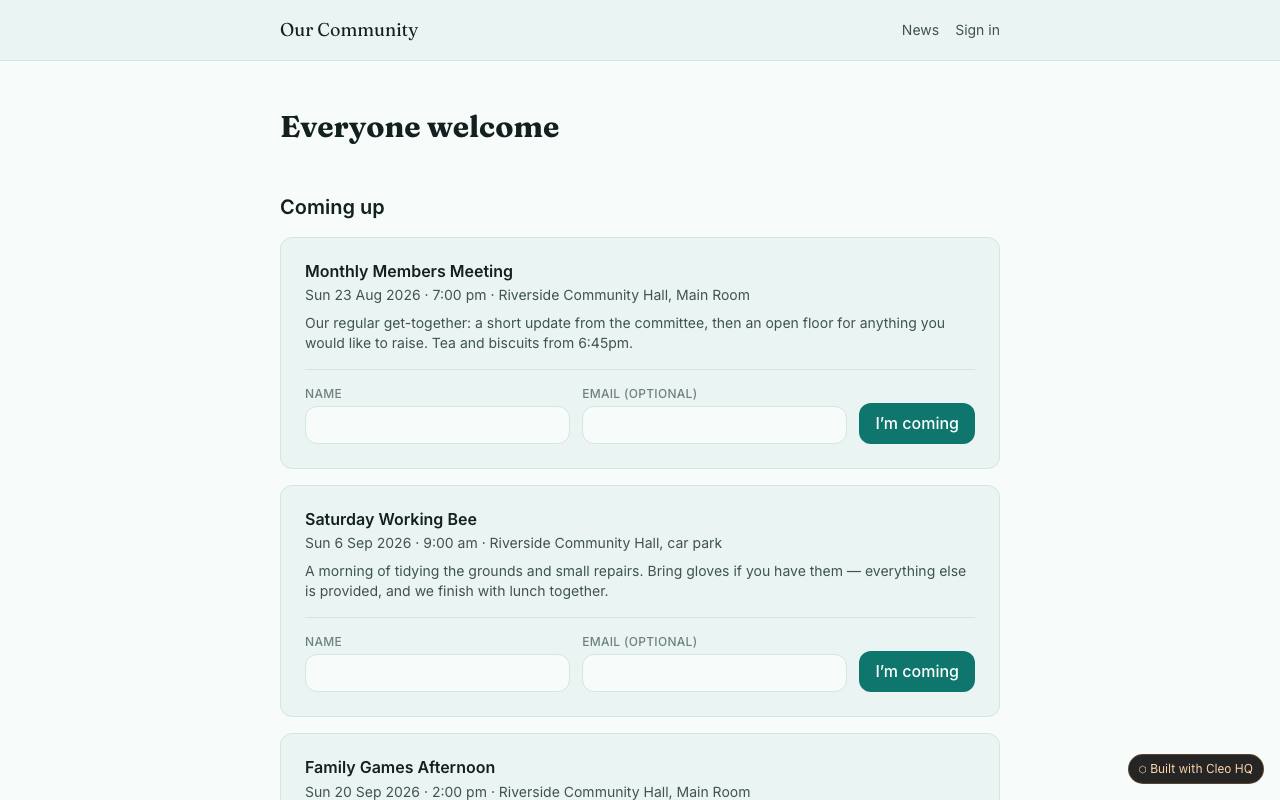
What should a newcomer learn from a community group’s homepage?
Explain the group’s purpose, who can take part, and what a first meeting is like. A newcomer may not know the acronyms or routines that regular members take for granted. The example pairs an introduction with announcements and events; include a contact route for someone who is interested but unsure whether the group is a fit.
How should a group use meeting RSVPs?
Ask for only the details organisers need to plan, such as a headcount or accessibility request, and explain whether an RSVP is required. A response should not imply a reservation if meetings are open to everyone. The sample connects upcoming meetings to an RSVP form; make location changes and cancellations easy to communicate to people who responded.
What makes an announcement useful between meetings?
Share information that affects members’ choices or participation, such as a decision, upcoming activity, or change in meeting arrangements. Keep dates and next steps visible, and archive old notices so they do not look current. The example gives organisers a news area; set a light publishing routine so the site reflects the group’s present work rather than its history alone.