Can a shopper add products without signing up?
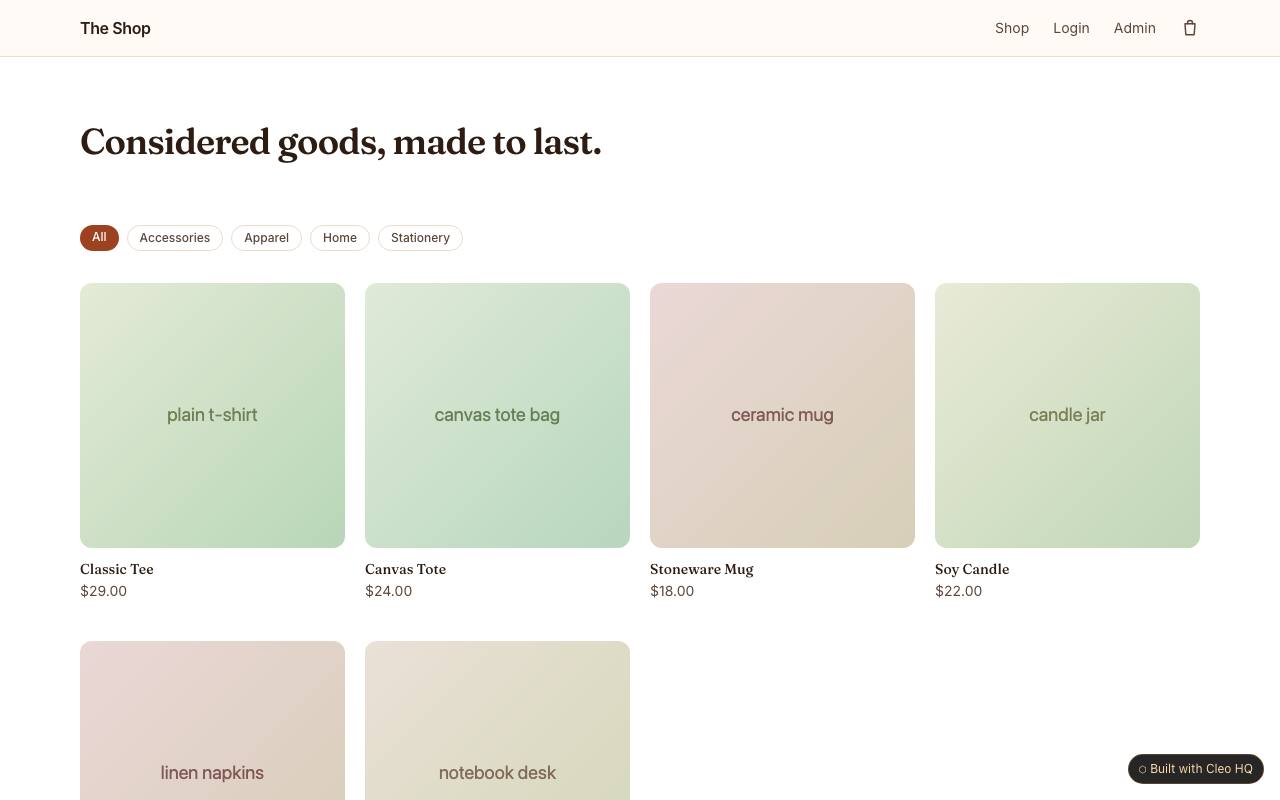
Yes. The example uses a guest cart, so a customer can choose products and review an order without first creating an account. That suits shops where a quick purchase matters more than keeping a member profile. A real store should still explain what contact and delivery details are needed at checkout, and what the buyer receives after placing an order.
What should I show on a product page before checkout?
Give shoppers the facts they need to choose: a clear product name, useful photos, price, options such as size or colour, and any delivery limits. The sample separates product details from the cart so a visitor can inspect an item before committing. Your return terms and stock status should also be easy to find, especially when they affect the buying decision.
Where does the shop owner manage orders and products?
The example includes an owner area for maintaining products and fulfilment, alongside the public catalogue and customer cart. That split matters because shoppers need a calm buying path while the seller needs practical controls. Before building on the idea, map the steps from a new order to packing, dispatch, and resolving a problem so the admin view supports the work you actually do.