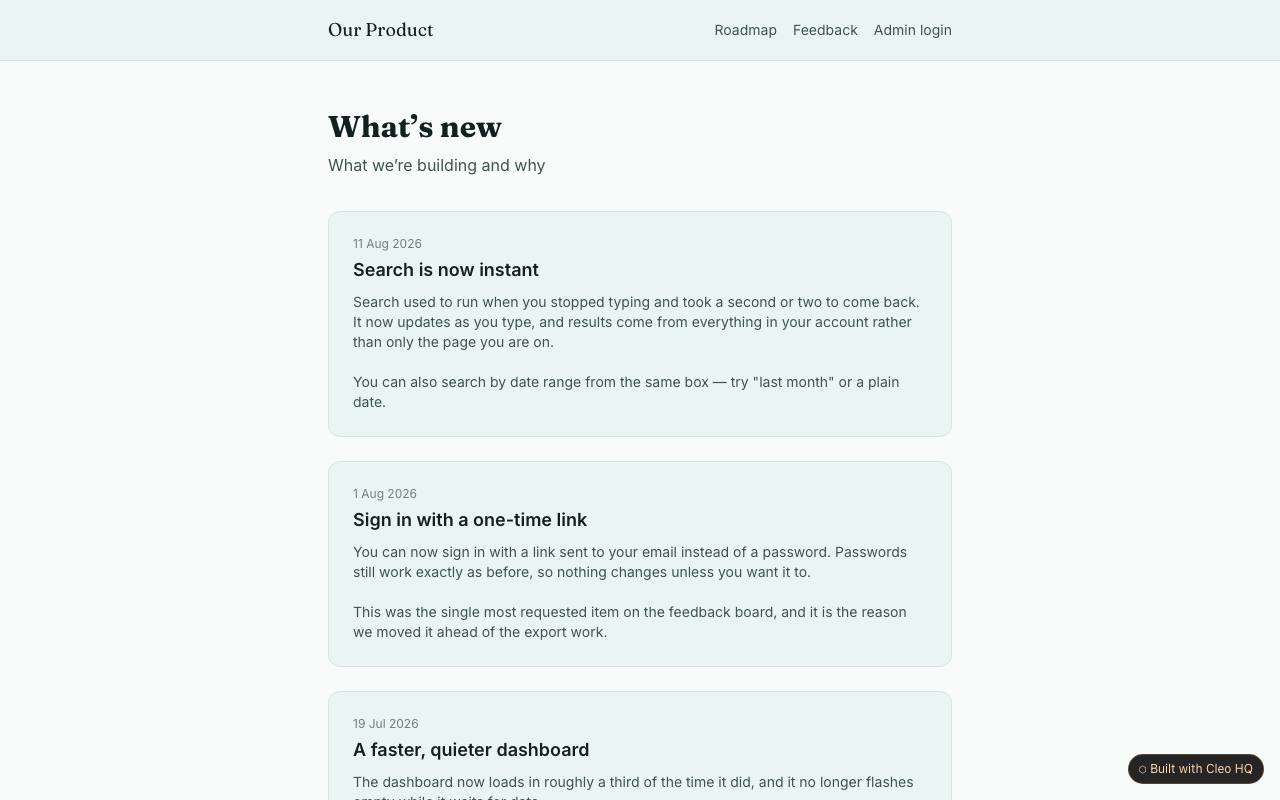
How should a changelog entry describe a release?
Lead with what a customer can now do or what has changed in their experience. Add detail only when it helps someone use the product or understand a fix. The example separates the public changelog from the roadmap, so a shipped item can be described as complete without making future plans sound certain.
What do roadmap stages communicate to customers?
Stages can distinguish work that is under consideration, being planned, or actively underway, provided the labels match how the team uses them. Avoid dates unless the team is ready to stand behind them. The sample has three roadmap stages; explain that priorities may shift and move an item when its status truly changes.
How should a team review feature requests and upvotes?
Treat votes as evidence of interest, not as a binding promise or a complete measure of value. Group duplicate requests, ask for the problem behind an idea, and tell customers when a decision is made. The example moderates requests before they reach the board; publish participation rules and remove personal or unrelated content consistently.