How many answer choices should a quiz question have?
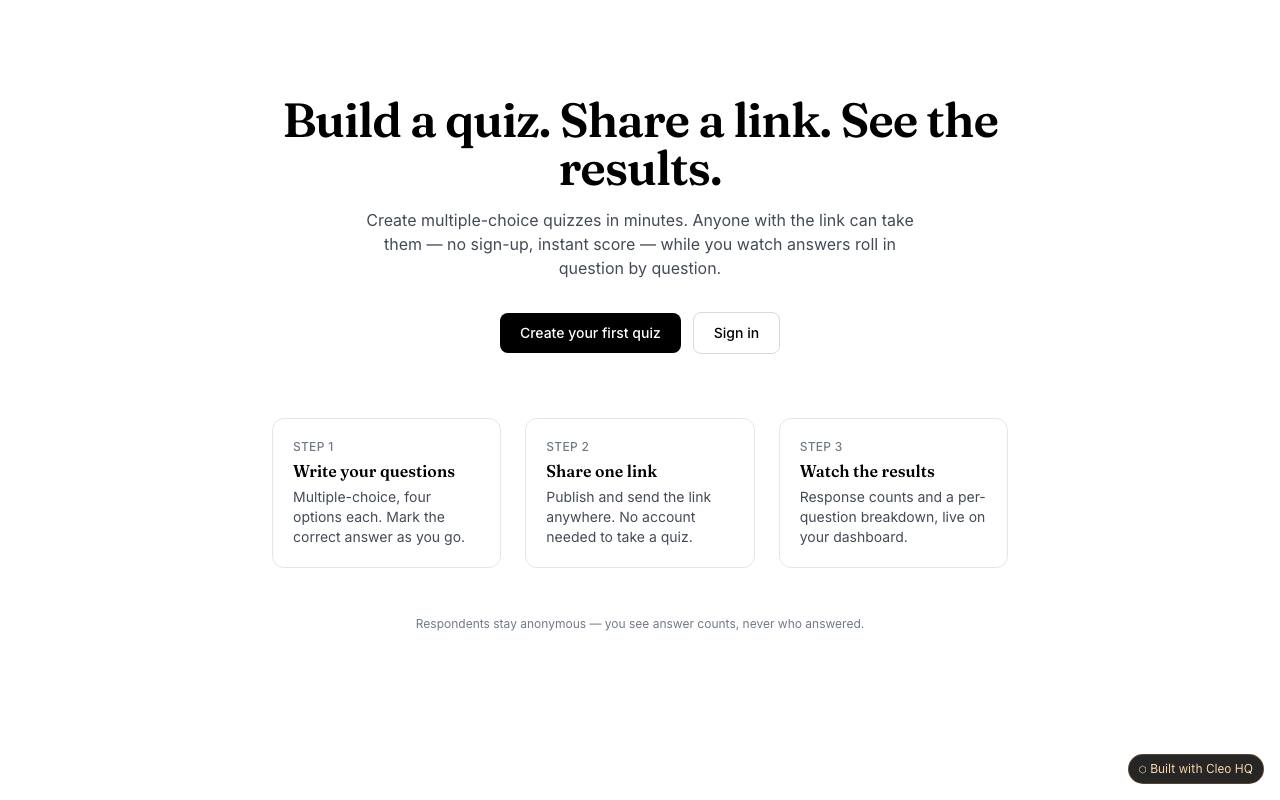
Use enough choices to make the question meaningful, but avoid adding implausible options just to make the list longer. Each answer should be distinct, and the wording should test the intended idea rather than reading skill. The example supports multiple-choice quizzes; review each question from a respondent’s perspective and remove choices that could reasonably be interpreted as correct.
What should respondents see after submitting a quiz?
Choose a result that fits the purpose: a score for practice, explanations for learning, or a completion message for a social quiz. If answers are not graded, avoid implying that there is a right or wrong outcome. The sample allows anonymous responses through a public link, so include any instructions respondents need before they submit and cannot revise their answers.
Can this quiz format work for training or education?
It can support short knowledge checks when each question maps to a lesson or learning goal. Use feedback to explain why an answer is correct, and avoid treating one quiz score as proof that someone has mastered a subject. The example provides the creation and response flow; the educator still needs to write accessible questions and decide how results will be used.