How should a team describe a degraded service?
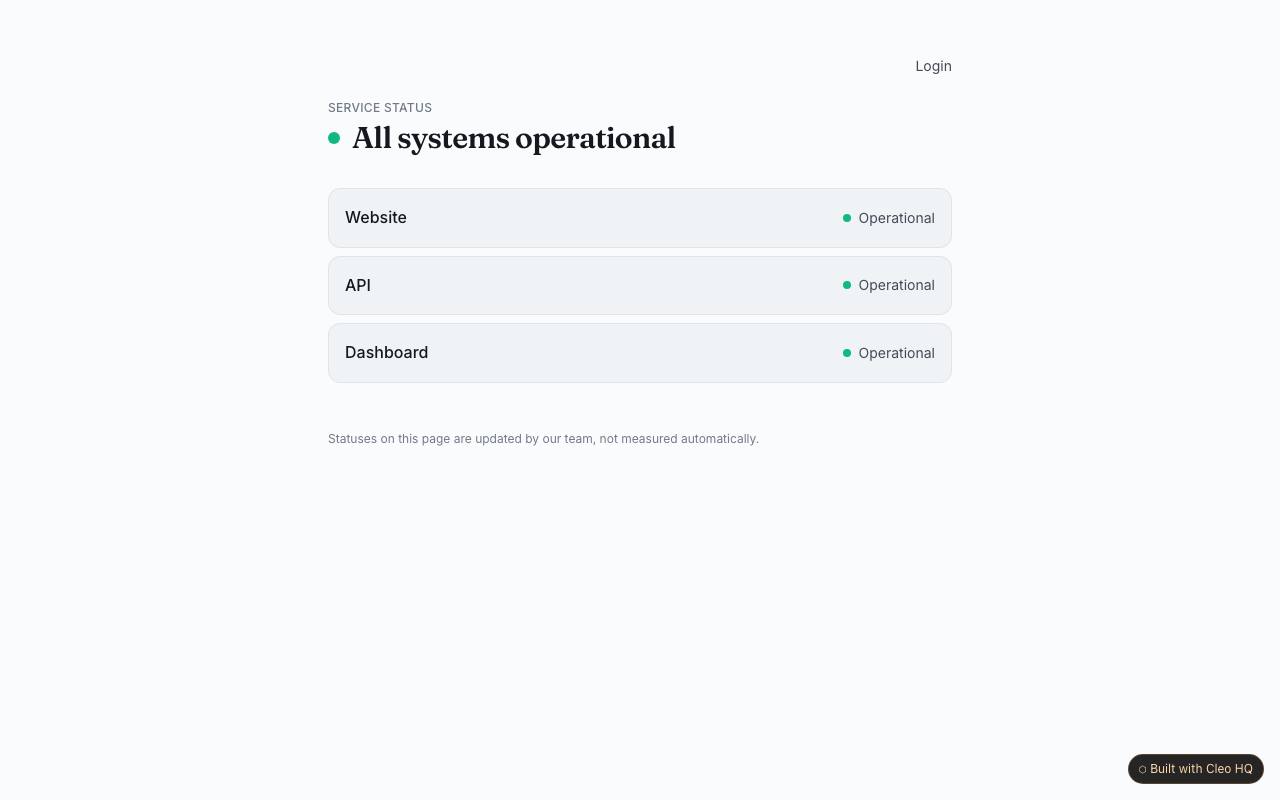
Explain what users may notice, which parts still work, and whether there is a workaround. A label alone does not tell a customer whether they can finish a task. The example supports separate service conditions and an overall headline; write updates around impact first, then add technical detail only when it helps a customer decide what to do.
What belongs in an incident update when the cause is unknown?
State the observed problem and its effect, say that the team is investigating, and provide a time for the next update if one is known. Do not guess at a cause just to fill the page. The sample includes current incidents and resolved history, so preserve an honest timeline as facts change and close the incident only when the service is stable.
Why keep resolved incidents on a status page?
A short history helps customers see whether an issue is new or part of a recurring pattern, and gives them context after service returns. Keep entries factual: what was affected, when it began, and when it was resolved. The example includes resolved history; decide how much detail is useful without exposing private customer information or internal discussion.